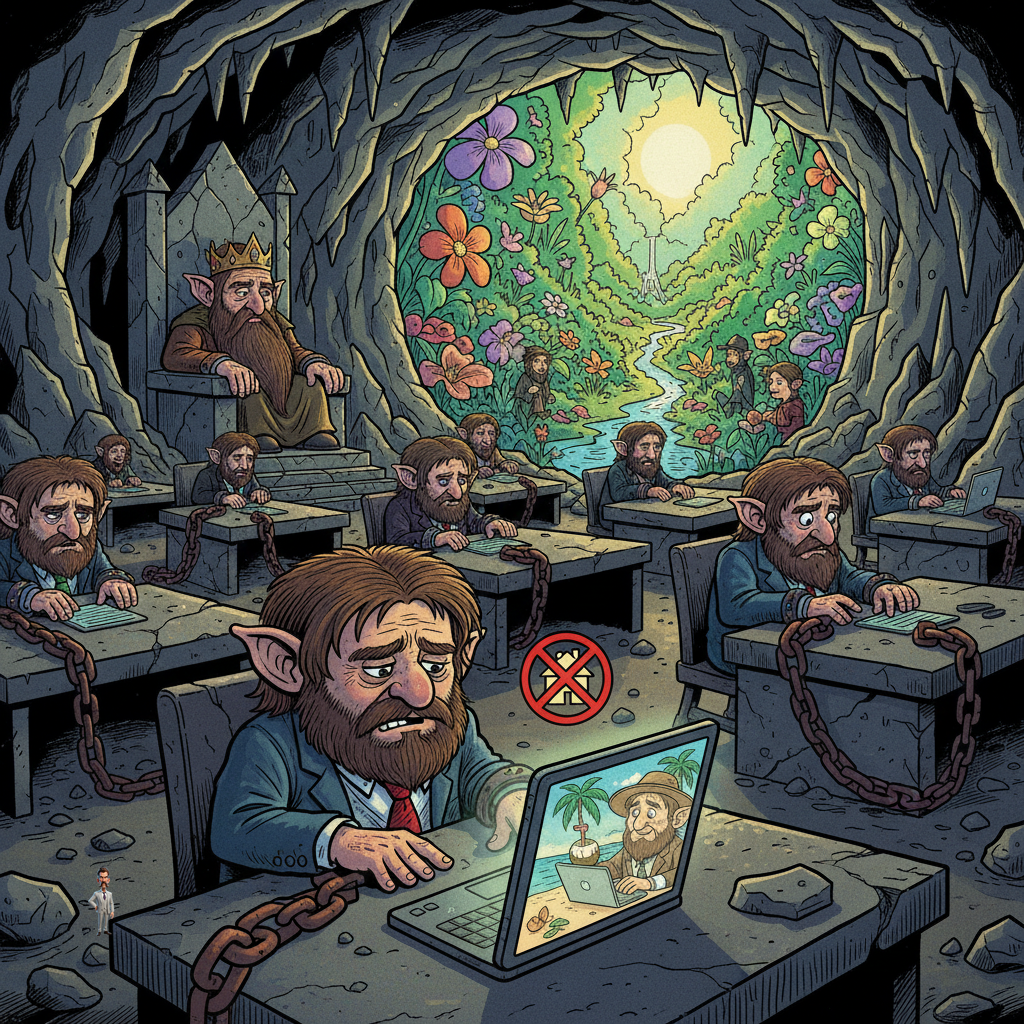
FLORES, INDONESIA — A groundbreaking study published today indicates that the extinction of *Homo floresiensis*, colloquially known as 'hobbits,' approximately 61,000 years ago, was not solely due to a severe drought, but rather their stubborn adherence to outdated work models. Researchers suggest that despite dwindling resources and increasingly harsh conditions, the ancient hominids insisted on commuting to their designated foraging territories.
“Our data shows a dramatic drop in rainfall, which naturally impacted their primary food sources, like pygmy elephants,” explained Dr. Elara Vance, lead paleontologist at the Institute for Prehistoric Corporate Governance. “However, what’s truly astonishing is their complete lack of innovation in resource acquisition. They just kept going to the same dried-up riverbeds, day after day, expecting different results.”
According to the study, early warning signs of environmental collapse were evident for centuries, yet the hobbits reportedly resisted any suggestion of decentralizing their food-gathering operations or exploring new, more resilient sustenance strategies. “We believe leadership was too focused on 'face time' and maintaining traditional social hierarchies to pivot effectively,” added Dr. Vance. “They were essentially 'return-to-office' advocates in a 'the office is literally gone' scenario.”
Experts now theorize that a more flexible, distributed approach to survival could have saved the species, but their rigid adherence to a 9-to-5 foraging schedule ultimately sealed their fate. The findings offer a stark warning to modern organizations facing similar, albeit less existential, challenges.