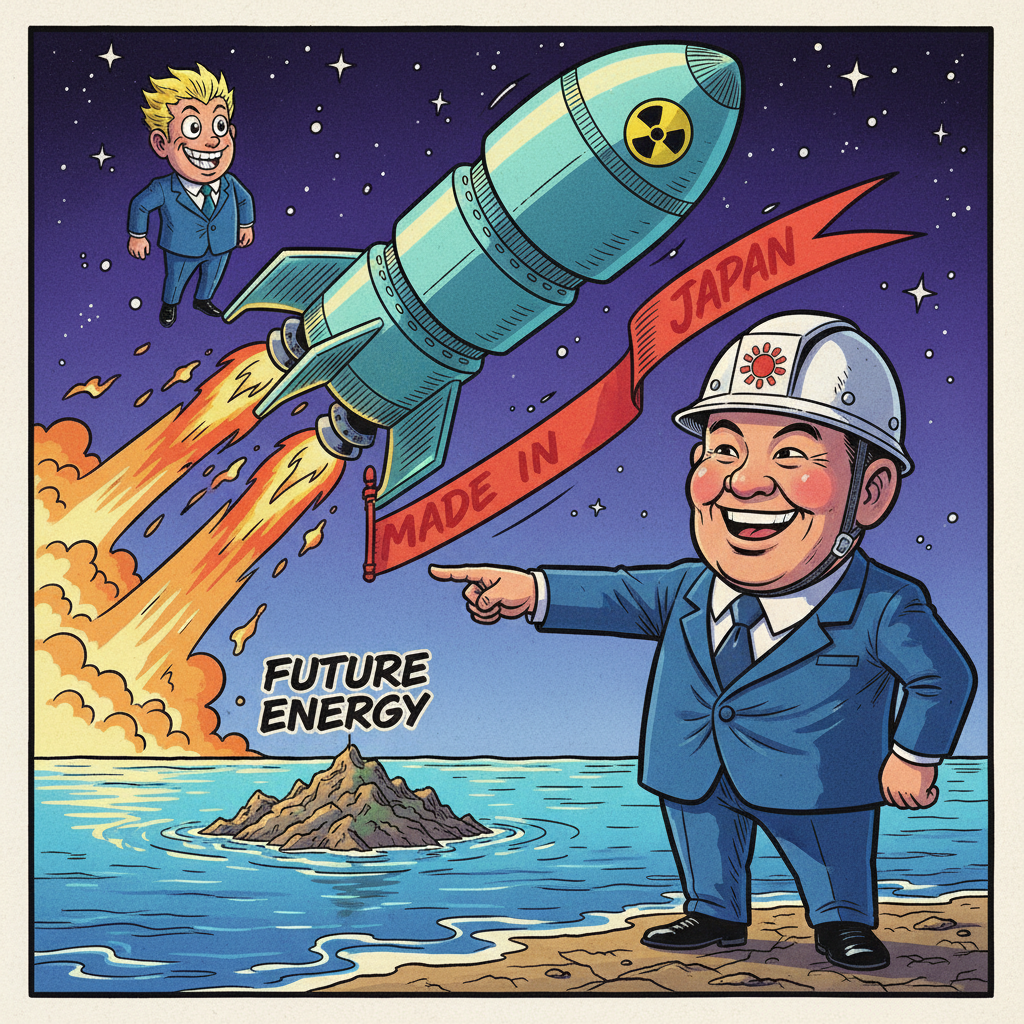
TOKYO – In a bold move signaling a new era of strategic avoidance, Japan has officially adopted an 'Out of Sight, Out of Mind' national energy policy, with the remote island of Minamitorishima earmarked as the flagship location for its nuclear waste disposal. The policy, lauded by government officials as 'innovative common sense,' aims to solve complex societal problems by simply moving them as far away as humanly possible.
“For too long, we’ve been bogged down by inconvenient realities like public opinion and environmental impact studies,” explained Dr. Kenji Tanaka, head of the newly formed Bureau of Extreme Geographic Solutions. “Our new approach is elegantly simple: if you can’t see it, it’s not a problem. Minamitorishima, being nearly 1,250 miles from Tokyo, offers unparalleled peace of mind. It’s practically in another dimension.”
Critics, however, questioned the long-term viability of a strategy that relies solely on distance. “What happens when we run out of sufficiently remote islands?” asked environmental activist Akari Sato. “Are we going to start launching our problems into space? Because I hear that’s getting expensive.”
Government spokespeople quickly dismissed such concerns, hinting at future plans to apply the 'Out of Sight, Out of Mind' principle to other pressing issues, including traffic congestion and the national debt, which they suggest could be relocated to an undisclosed deep-sea trench. The initiative is expected to boost national serenity by an estimated 400%.
Sources close to the project indicate that initial proposals included sending the waste to the moon, but logistical challenges were deemed too 'visible' for the new policy’s ethos.