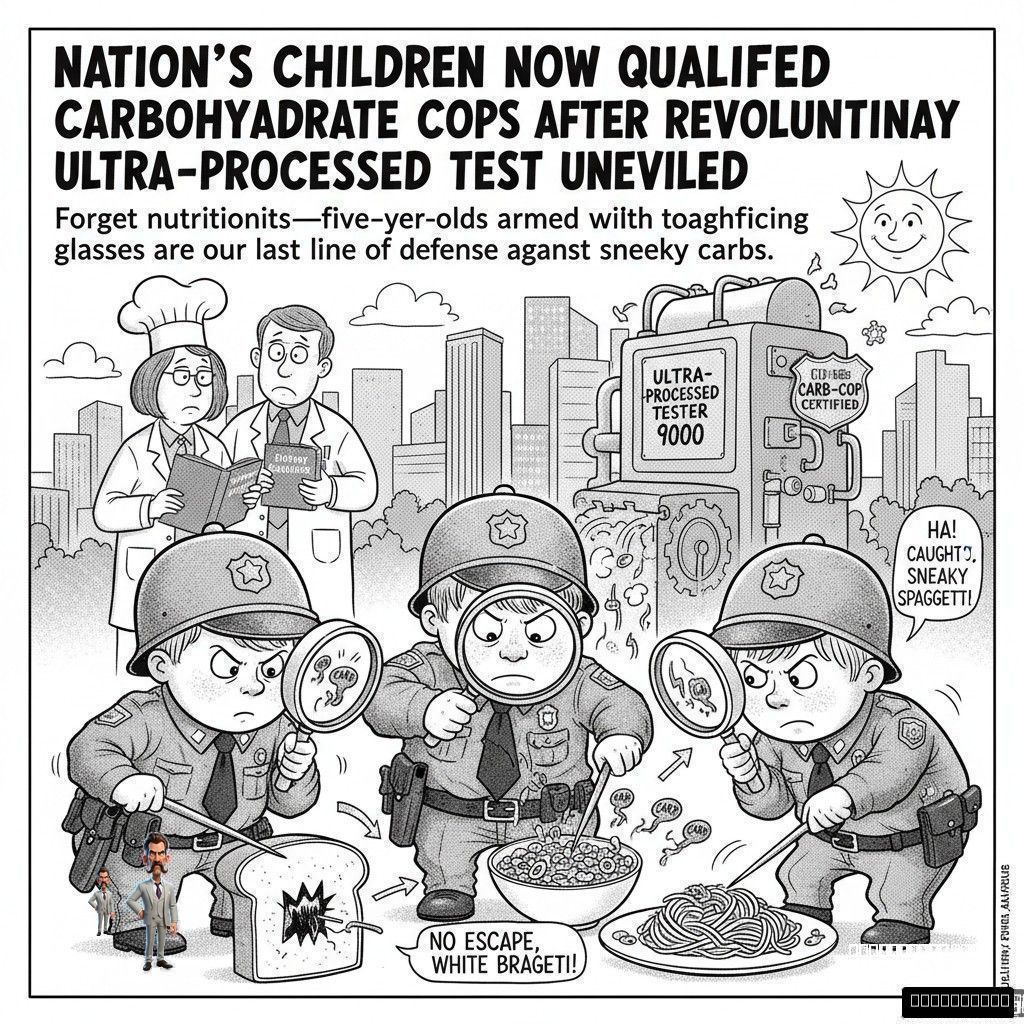
BRIGHTON, OHIO — In a groundbreaking effort to combat the nation’s growing confusion over ultra-processed carbohydrates, the Department of Edible Affairs (DEA) has introduced the new "Kid-Approved Carb Authenticity Test," designed to empower children as the ultimate arbiters of carbohydrate purity.
Americans have long struggled with the nebulous concept of 'ultra-processed carbs,' a term so slippery that it has sparked everything from panic buying of artisanal kale chips to midnight vigils outside quinoa mills. Nutritional guidelines recently advised citizens to avoid these mysterious foods, but no clear instruction manual existed—until now.
“The science was clear: if even adults can’t tell if that bread is ultra-processed or just mildly existentially unwell, who can?” said Dr. Miriam Wafflestein, Director of Carb Integrity at the University of Subtle Snack Studies. “So we turned to the most unbiased, brutally honest demographic: children aged five to seven.”
The test takes a refreshingly no-nonsense approach. Armed with a toothpick, a magnifying glass, and a mildly disapproving glare, kids can now conduct a series of three simple, foolproof steps:
1. **The Crunch Test**: If the bread sounds like a miniature construction site, it’s ultra-processed. 2. **The Ingredient Roll Call**: List all ingredients aloud; if words longer than 'barbecue' are present, or if the phrase 'natural flavors' is used, instant failure. 3. **The Time Travel Sniff**: If it smells like it could outlast a nuclear winter, beware.
The DEA’s guidelines specify that any carbohydrate failing two out of three tests must be immediately confiscated and sent to the Bureau of Carb Rehabilitation. This new policy has already led to a 27.3% drop in children attempting to eat store-bought muffins.
“It’s like having a tiny FDA in the pantry,” explained Beatrice Lungworth, 6, self-appointed Chairwoman of the Neighborhood Carb Task Force. “Last week, I stopped my brother from eating a granola bar because it smelled like a chemistry lab. He cried, but he’s safer now.”
Parents nationwide are reportedly ecstatic. “Before this, I felt helpless watching my kids dunk toaster pastries into milk like it was an art form,” said local mother and snack referee, Janice Wimple. “Now they interrogate their snacks like FBI agents. It’s exhausting but effective.”
Critics, however, warn of an emerging 'Carb Elitism,' where simple pleasures like white bread sandwiches may be demonized unjustly. “We’re worried this test might create a generation that sees toast as the enemy,” cautioned Professor Nigel Crumbly, Chair of the Ultra-Processed Misunderstanding Alliance. “Next, they'll be checking the emotional wellbeing of their carbs.”
In response, the DEA has already hinted at plans to develop a companion "Fruit Authenticity Test," involving a series of dances and interpretive fruit-smelling exercises. Details are scarce, but insiders disclose it will require children to hum the national anthem while juggling peeled grapes.
For now, the ultra-processed carb test remains a darling of pediatric nutrition circles and a source of mild terror for manufacturers of vaguely defined snacks. One thing is certain: in the war against inscrutable carbs, the children have spoken—and they’re coming for your bagels.
As Dr. Wafflestein summed up, “If a kid can’t figure out what’s in your bread, maybe you shouldn’t be eating it.”