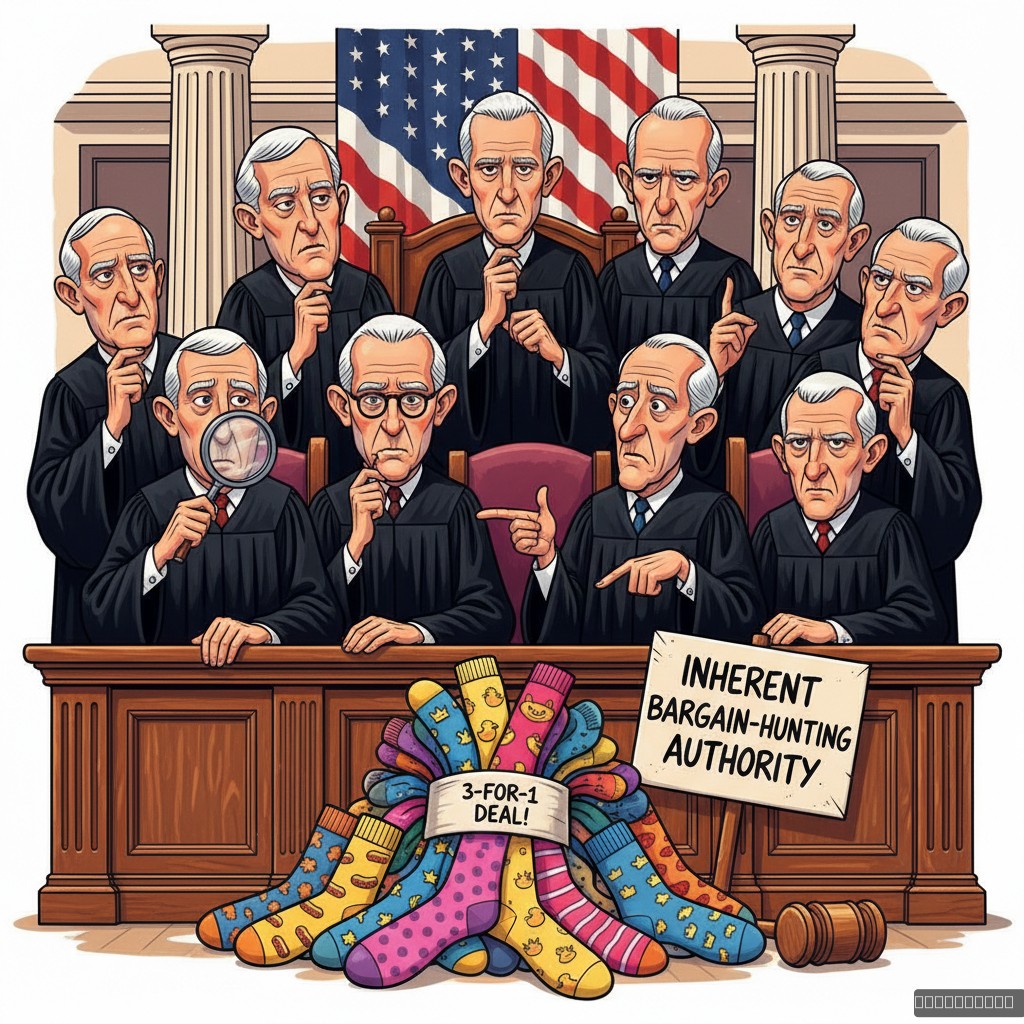
WASHINGTON D.C. – In a landmark 6-3 decision handed down Monday, the Supreme Court of the United States asserted its exclusive jurisdiction over all matters pertaining to international tariffs and, more broadly, the nation's collective ability to secure a 'decent deal.' The ruling effectively designates the high court as the final word on what constitutes a 'fair price' for imported goods, sidelining both the executive and legislative branches.
Chief Justice Alistair Finch, writing for the majority, stated the court's newfound role was a 'natural extension of our constitutional mandate to ensure domestic tranquility and, frankly, prevent American consumers from getting fleeced.' He cited Article I, Section 8, Clause 1, which grants Congress the power to 'lay and collect Taxes, Duties, Imposts and Excises,' as clearly implying a judicial oversight on whether those duties are 'just, reasonable, and conducive to a good coupon day.'
Presidential economic advisor Dr. Philomena 'Penny' Pinchworth, from the newly formed Office of National Savings and Bulk Purchases, expressed cautious optimism. 'While we respect the Court's enthusiasm for consumer advocacy, we do worry about the logistical challenges of nine unelected officials personally vetting every shipment of artisanal cheese and inflatable lawn ornaments,' Pinchworth stated, adjusting her 'I Love Bargains' lapel pin.
Meanwhile, a spokesman for the Department of Commerce's Bureau of International Price-Matching, Bartholomew 'Barty' Dealmaker, announced a new initiative. 'We're preparing a series of amicus briefs detailing the optimal mark-up for imported fidget spinners,' Dealmaker confirmed, 'and we're confident the Justices will see the wisdom in a 15% tariff for premium models, but only 7.5% for the basic plastic ones. It’s all about value.'