COLDVENTURE, USA — In a groundbreaking fusion of ice and asphalt tactics, the U.S. Olympic speed skating team has officially embraced NASCAR’s famed 'bump drafting' technique, promising to deliver speeds that not only dazzle but also mildly terrify purists of the art of gliding.
Starting this season, Team Pursuit events will feature athletes pushing one another around the oval at speeds exceeding 30 miles per hour — an unprecedented move designed to 'bring the excitement of Sunday pit stops to the ice rink,' according to Head Coach Dirk Slapspin, Strategic Innovation Director of the Department of Extreme Sports Synergy.
"We realized that traditional drafting was frankly too polite," Slapspin declared during a press scrum at the National Ice Speedway Dome, where ice is reportedly now maintained to NASCAR standards, including subtle tire tread grooves for enhanced grip. "By literally bumping our fellow skaters, we’re creating a kinetic ballet that combines the finesse of figure skating with the good-natured shunts of stock car racing."
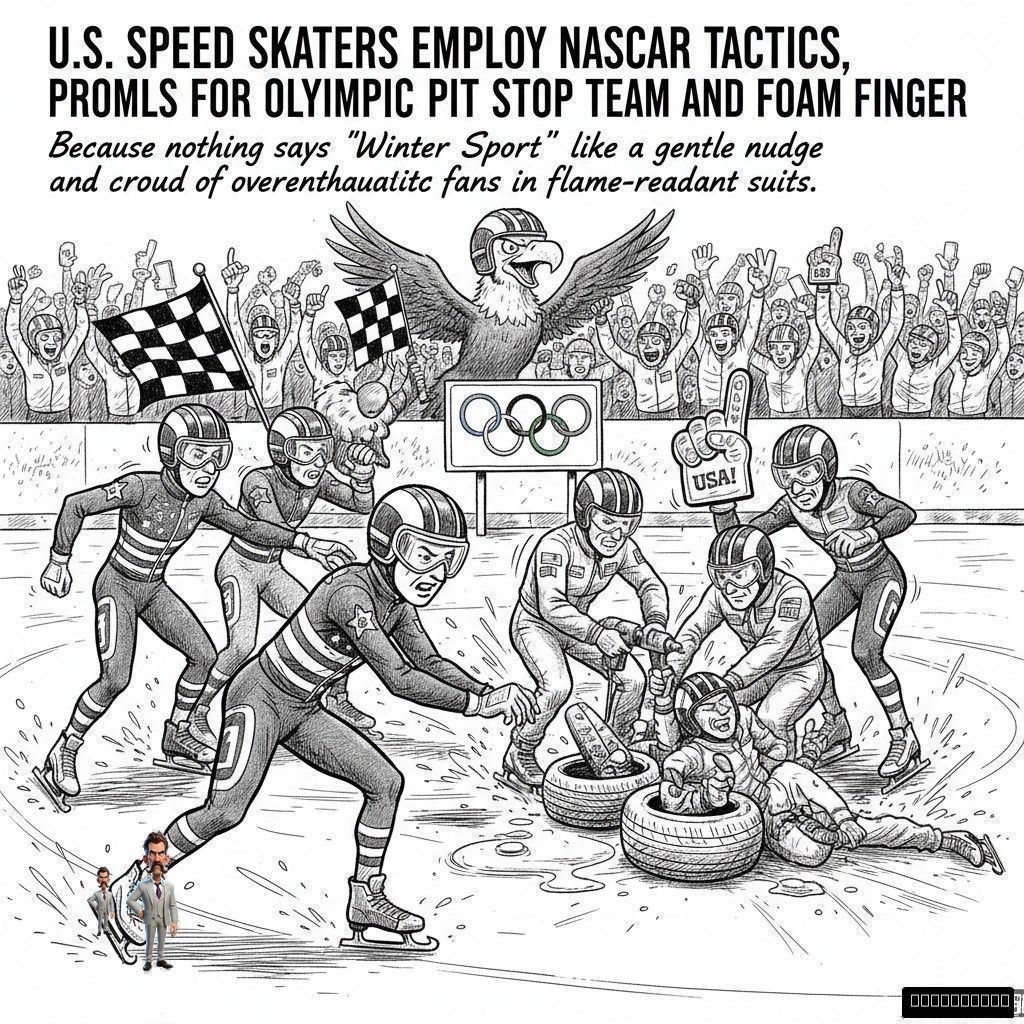
To facilitate this daring approach, the U.S. Speed Skating Team has formed a specialized Pit Crew Support Unit, complete with a designated foam finger specialist, two tactical cheerleaders, and a mechanic to tighten skate laces mid-race — believe it or not, through a covert ice-wedge window. The team’s new motto? "If you’re not bump drafting, you’re just gliding quietly to second place."
Reaction from the international skating community has been mixed. Dr. Eunice Glacialis, President of the International Federation of No-contact Winter Sports (IFNW), expressed mild alarm: "While the integration of motor-race strategies is inventive, we fear that fans who enjoy the serene grace of ice skating might inadvertently mistake events for demolition derbies."
Nonetheless, sponsors have wholeheartedly embraced the hybrid spectacle. Frosty Oil, a synthetic lubricant company with dubious environmental record, has already pledged $3 million for 'Ice Track Pit Stop Integration' research, hoping to capitalize on the newfound need for high-octane ice conditions.
Fans are equally enthused, with ticket sales up 47.3% for the upcoming Winter Olympic trials, according to a detailed report from the Department of Spectator Engagement Optimization (DSEO). "It’s like watching art meet automotive aggression," enthused local spectator Sheila Wobbleton, who admitted she traditionally found speed skating "just a bit too, you know, smooth and boring."
The move to bump drafting has also sparked calls for rule changes, including mandatory flame-resistant suits, official pit stop windows, and the introduction of real-time 'drafting pressure meters' displayed on giant in-arena LED screens. Rumors even suggest the introduction of yellow caution flags for 'excessive bumping,' but these remain unconfirmed.
In the rare event of a collision resulting in a skater sliding off the track, the new protocol encourages teammates to perform swift tire-change style assists, replacing skate blades or offering quick motivational chants. "We’re redefining teamwork," said Assistant Coach Penny Pushmore, known for her sudden appearances on ice to 'encourage' athletes mid-race with a megaphone. "It’s all about momentum — both on the ice and in morale."
As the U.S. team gears up to debut their NASCAR-inspired style on the global stage, experts predict a surge in winter sports crossover fan fiction, featuring romantic rivalries between skaters and pit crew members wielding oversized wrenches. Whether bump drafting will become a staple or an amusing footnote in Olympic history remains to be seen, but for now, it’s clear that the world of speed skating is hurtling into uncharted—and delightfully absurd—territory.