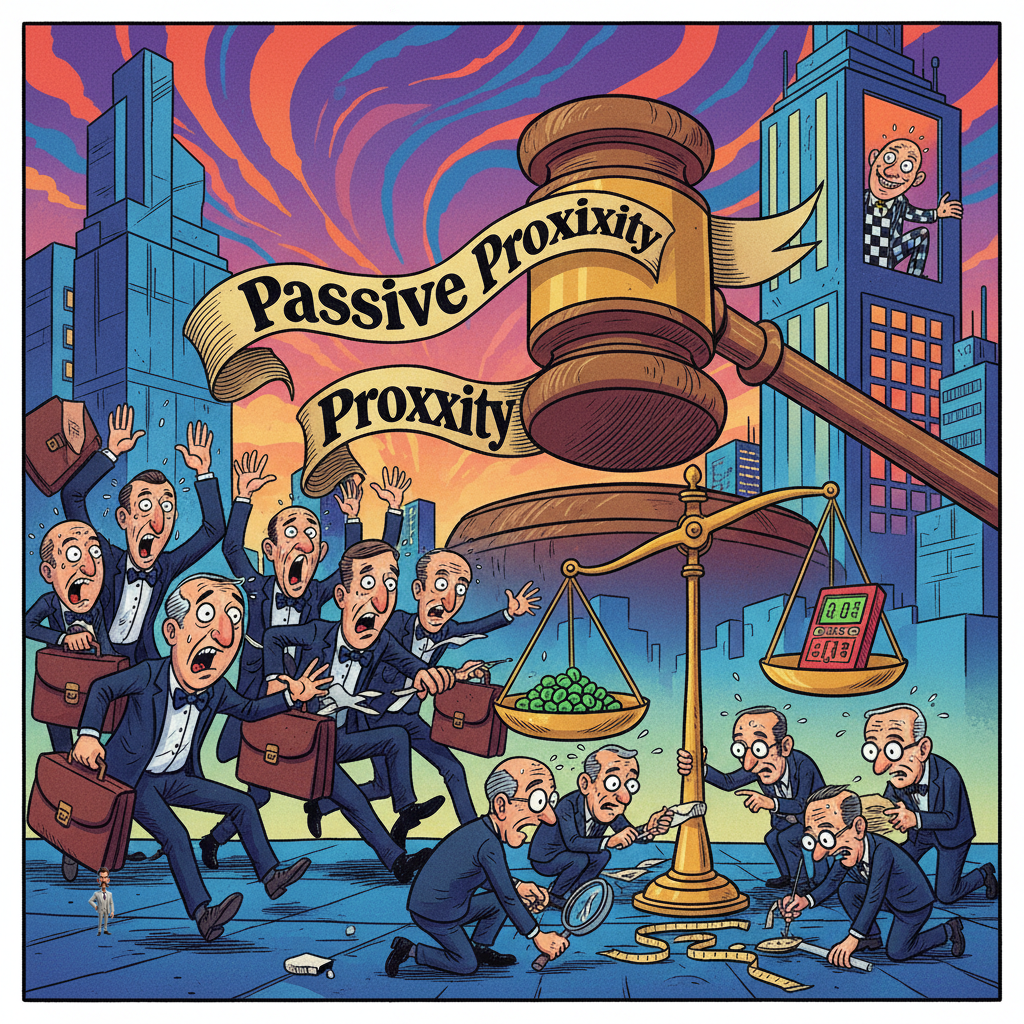
NEW YORK – Following the recent unsealing of documents related to the late financier Jeffrey Epstein, a palpable wave of anxiety has reportedly swept through the nation's upper echelons, as legal experts and social ethicists grapple with the unprecedented legal implications of 'passive proximity' to alleged wrongdoing.
Sources close to several prominent figures, who were merely 'in the general vicinity' of Epstein's social circles, indicate a growing fear that simply having shared a canapé or a fleeting glance with an alleged perpetrator could now constitute a prosecutable offense. "We're seeing a 300% increase in requests for 'Alibi Architects' and 'Proximity Purifiers' – specialists who can retroactively prove you were, in fact, thinking about your dry cleaning at the exact moment a problematic conversation occurred," stated Dr. Millicent Vane, Head of Epistemological Ethics at the Institute for Situational Innocence.
The Department of Abstract Accountability (DAA), a newly formed federal agency, is reportedly developing a 'Complicity Coefficient' – a complex algorithm factoring in shared airspace, ambient noise levels, and the precise velocity of eye contact. "Our initial models suggest that merely being within a 7-meter radius of a problematic conversation, while simultaneously failing to emit a 'disapproving hum,' could carry a minimum sentence of 18 months of public shaming," confirmed DAA spokesperson, Bartholomew 'Barty' Finch, from his undisclosed bunker.
Concerned citizens are advised to carry notarized alibis and a small, portable 'moral compass' for immediate calibration.