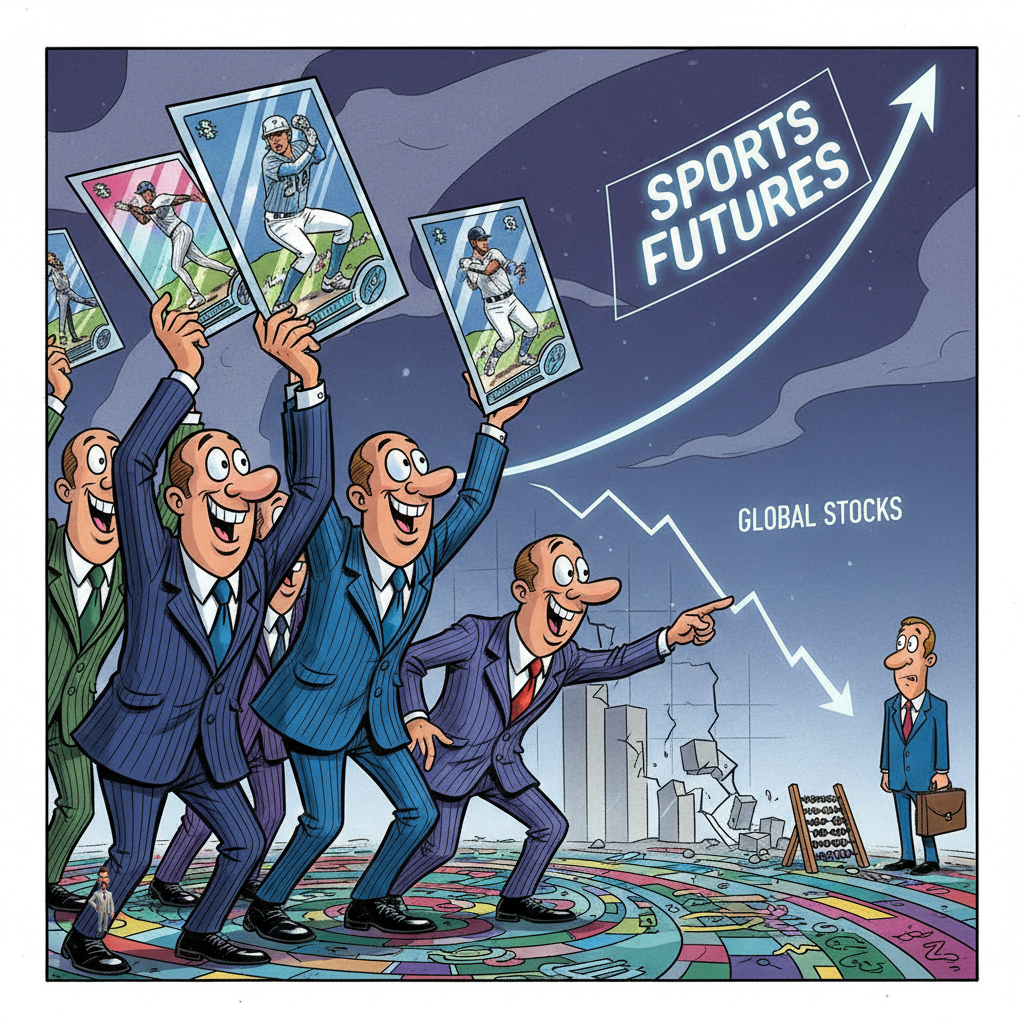
NEW YORK, NY – Following a recent, high-profile case of a household’s entire savings being liquidated into a rare holographic Charizard, leading financial institutions are reportedly reassessing the stability of traditional investment vehicles. Sources close to several major hedge funds indicate a growing internal consensus that the 'sports card futures' market offers a more robust and emotionally fulfilling alternative to conventional stocks and bonds.
“While some might see a $22,000 loss on a speculative rookie card as a ‘problem,’ we see it as a bold, if slightly premature, foray into a burgeoning asset class,” explained Dr. Evelyn Thorne, head of Behavioral Economics at the fictional 'Global Wealth Institute.' “The emotional highs and lows of opening a booster pack, the thrill of the chase – these are metrics traditional finance simply can’t quantify, but they are undeniably powerful drivers of perceived value.”
The shift comes as younger, digitally native investors increasingly view the stock market as a rigged game, preferring the transparent, if often devastating, outcomes of online card breaks and eBay auctions. “You know exactly what you’re getting into,” said Chad 'The Collector' Peterson, a self-described 'portfolio manager' specializing in 1990s basketball cards. “It’s not like those fancy Wall Street guys who hide their losses in derivatives. Here, it’s just me, a stack of cardboard, and the crushing weight of my poor life choices, all out in the open.”
Critics, primarily those still clinging to the outdated concept of 'diversified portfolios,' warn that this trend could lead to widespread financial instability. However, proponents argue that the sheer joy of owning a limited-edition foil parallel card far outweighs any potential for a comfortable retirement or, indeed, paying for groceries.