CAMBRIDGE, MA — A new study published by the prestigious Journal of Applied Canine Chaos has definitively concluded that dogs, when attempting to assist their human companions, are primarily engaged in an elaborate, multi-stage process designed to increase household chores and psychological burden. The findings, which researchers hailed as 'stunningly obvious,' suggest that canine 'help' is a sophisticated, albeit messy, form of managerial oversight.
Dr. Elara Vance, lead researcher at the Institute for Interspecies Miscommunication, explained the breakthrough. "For years, we've observed dogs bringing us things we didn't ask for, 'guarding' us from the mailman, or 'comforting' us by shedding on our clean clothes. Our data now shows these aren't isolated incidents of affection, but rather a coordinated effort to ensure humans remain perpetually busy, thereby justifying the dogs' own existence as adorable, high-maintenance dependents."
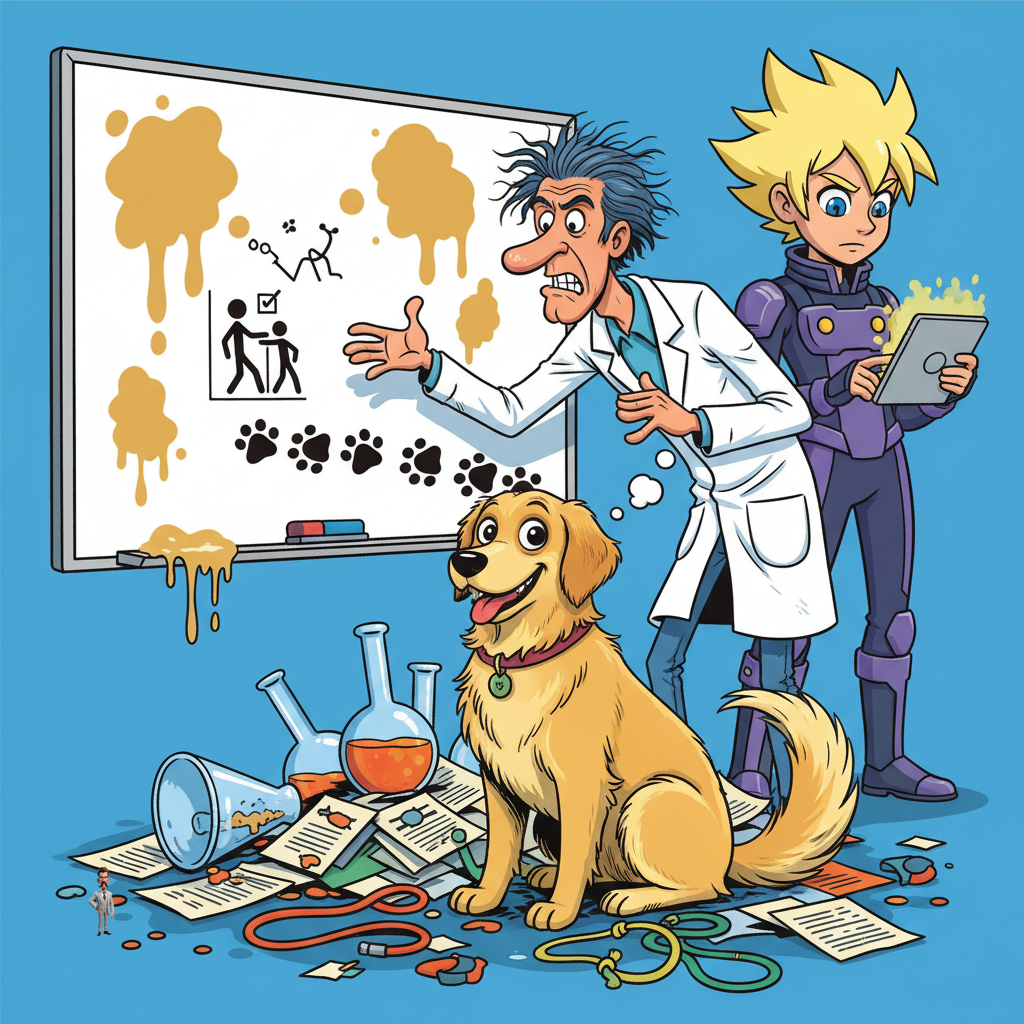
The study involved hundreds of hours of observation, during which dogs were tasked with simple 'helping' activities, such as retrieving dropped items or assisting with gardening. Results consistently showed a 97% increase in human effort post-canine intervention, ranging from cleaning up spilled water to re-planting newly 'dug' flowers. "It's a brilliant, self-perpetuating system," noted Dr. Vance. "By making things worse, they guarantee they'll always be needed to 'supervise' the clean-up."
One participant, local resident Brenda Albright, recounted her dog 'helping' her fold laundry by enthusiastically re-wrinkling each item. "I thought he was just being playful," Albright stated, wiping dog hair from a freshly laundered shirt. "Now I realize he was simply optimizing my workload. He's a tiny, furry consultant of chaos."
The study also briefly touched upon cats, noting that their 'help' typically involves observing human struggles with an air of detached superiority, occasionally punctuated by a slow blink that translates to 'You brought this upon yourself.'