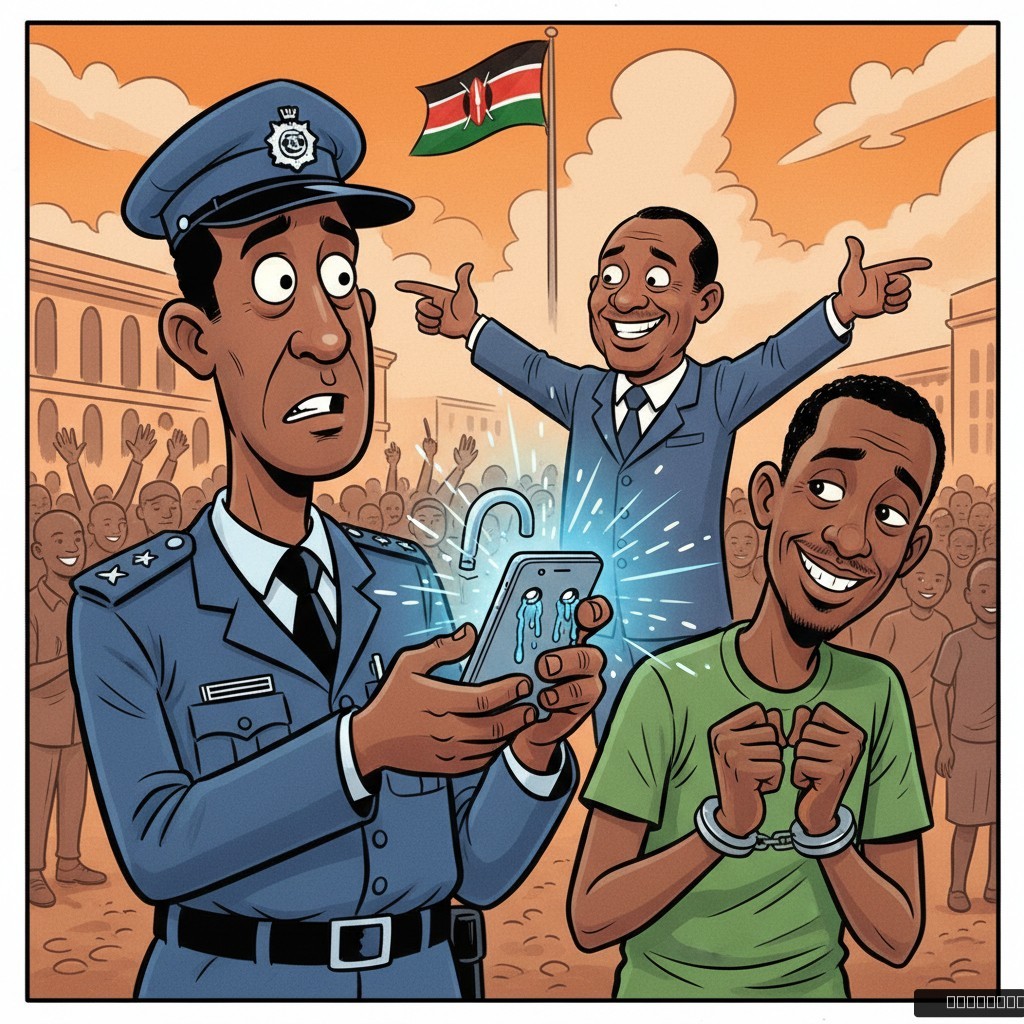
NAIROBI – Kenyan law enforcement officials have unveiled a groundbreaking new policy, dubbed 'Digital Empathy Protocol 7B,' after a prominent activist's phone reportedly unlocked itself while in police custody. The incident, involving pro-democracy advocate Boniface Mwangi, has been hailed by authorities as a significant step towards a more 'cooperative' digital future.
“We believe Mr. Mwangi’s phone, sensing the gravity of the situation and perhaps the inherent goodness of our intentions, simply decided to open up,” stated Chief Inspector Mildred Kanyingi, Head of the Department of Spontaneous Digital Compliance. “This eliminates the need for cumbersome warrants or the historically awkward act of asking for a password.”
While a recent report from Citizen Lab suggested Israeli-made Cellebrite software was used, Kenyan officials vehemently deny this, asserting the phone’s independent decision-making. “To suggest we used advanced forensic tools would be to undermine the phone’s agency,” added Dr. Elara Vance, a newly appointed 'Techno-Spiritual Liaison' for the National Police Service. “We merely provided a conducive environment for its digital soul to express itself.”
Critics, however, remain skeptical, citing a sudden 300% increase in 'cooperative' device unlocks since July. Mwangi himself expressed surprise, noting, “My phone has never been this understanding before.” Authorities are now exploring similar 'empathetic' approaches for encrypted messaging apps and bank accounts.