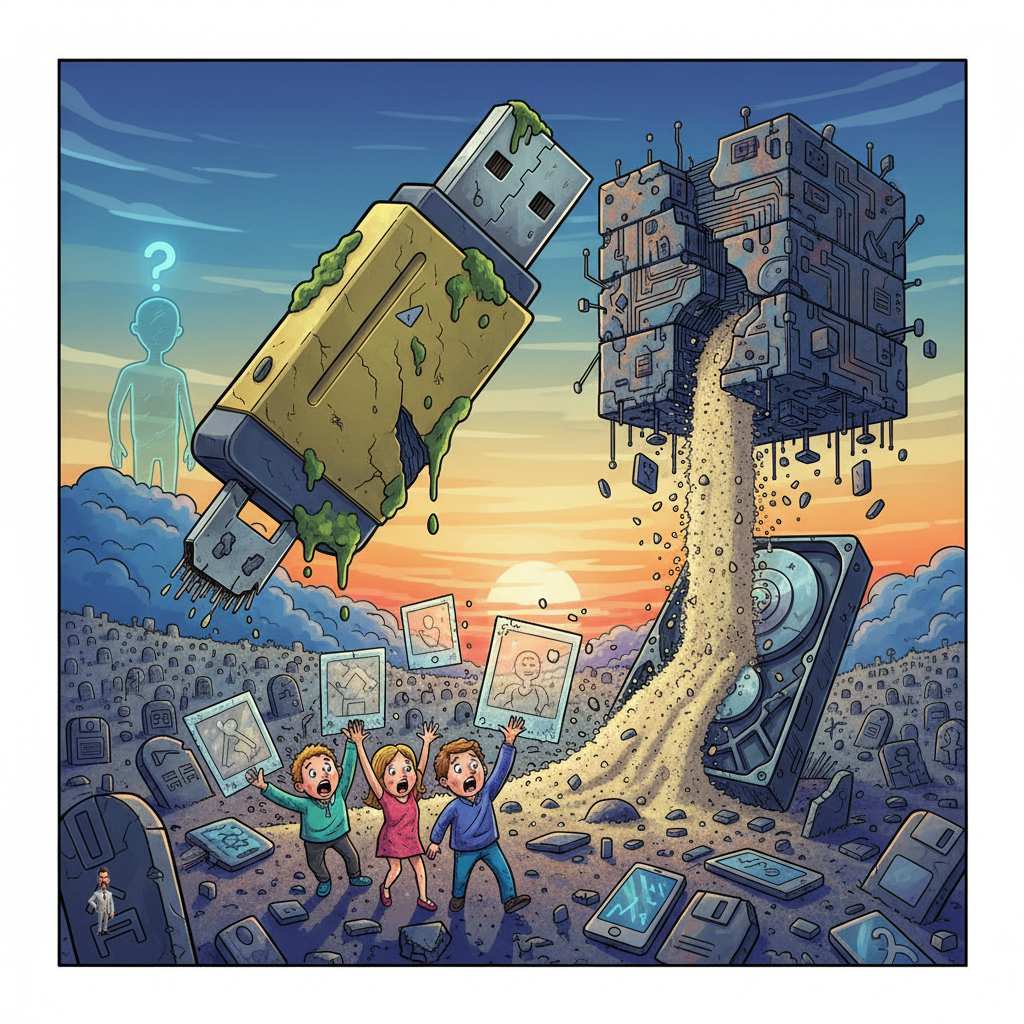
CUPERTINO, CA — In a rare moment of candor, a consortium of the world’s leading data storage manufacturers has issued a joint, albeit understated, statement confirming that every single photo, video, and document you’ve ever saved is destined for eventual, irreversible corruption. The revelation, buried deep within a press release ostensibly about new microSD card advancements, suggests that the entire digital archiving industry is built on a foundation of planned obsolescence for your most cherished moments.
“While we strive for optimal data retention, the laws of physics, entropy, and frankly, our quarterly earnings reports, dictate that your precious memories will, at some point, simply cease to exist in a readable format,” stated Dr. Evelyn Reed, Head of Ephemeral Storage Solutions at a prominent tech firm, in a follow-up interview. “Think of it less as storage and more as a very, very slow-acting digital shredder.”
Consumers, who have been diligently backing up their lives to various cloud services and physical drives, expressed a mix of resignation and mild annoyance. “So, all those photos of my kids growing up, the wedding video, my meticulously organized tax documents from 2008? All just… poof?” asked local man Gary Peterson, staring blankly at his external hard drive. “I thought this was progress.”
Industry insiders suggest the announcement is a strategic move to manage expectations, rather than a bug. “It’s not a flaw, it’s a feature,” clarified one anonymous engineer. “It ensures repeat business. How else do you think we keep innovating new, slightly larger capacity cards?”
The revelation has prompted a surge in demand for physical photo albums and the rediscovery of forgotten hobbies like painting and interpretive dance, as humanity grapples with the fleeting nature of its digital legacy.