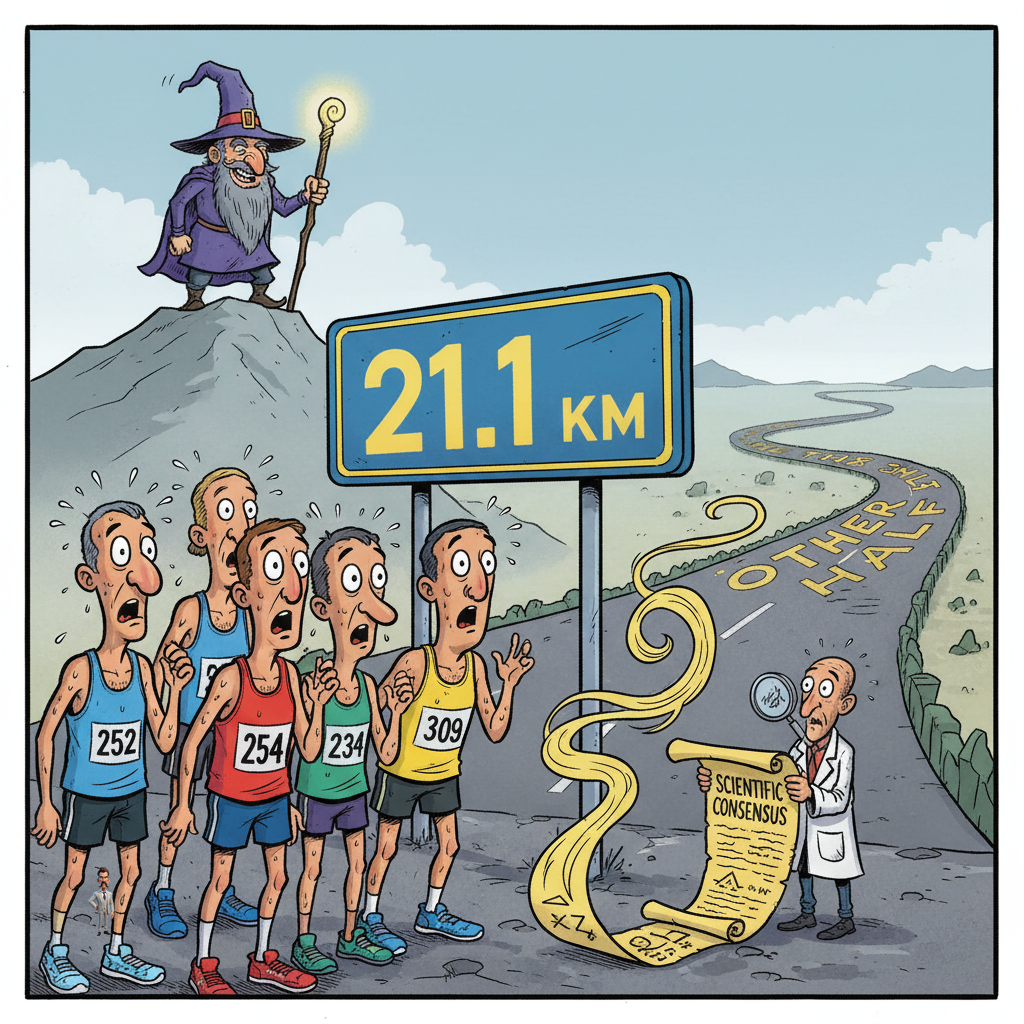
TOKYO – In a groundbreaking revelation that has sent shockwaves through the elite running community, sports scientists have officially confirmed that the latter portion of a marathon is, in fact, an integral component of the race. This critical insight comes after Canadian marathoner Cam Levins, who was reportedly on pace to shatter his national record at the Tokyo Marathon, experienced a 'late-race deceleration' that saw him finish well off his personal best.
“For years, we’ve operated under the assumption that if you just *feel* good at the 21-kilometer mark, the rest takes care of itself,” stated Dr. Brenda Carmichael, lead researcher at the Institute for Advanced Athletic Delusion. “Our latest data, however, indicates a strong correlation between continued effort and successful completion of the *entire* distance. It's truly revolutionary.”
Levins' performance, which saw him finish 73 seconds shy of his record, has become a case study for the newly understood phenomenon. “It’s a tough pill to swallow, knowing that the second half still counts,” admitted a fictional spokesperson for the International Association of People Who Think They’re Faster Than They Are, 'Barry Pace-Setter.' “We had so many hopes riding on the 'first half is the whole half' theory.”
The findings are expected to prompt a significant re-evaluation of training regimens, with many coaches now considering incorporating 'running for the full duration' into their programs. Experts warn, however, that this radical approach may take some getting used to.