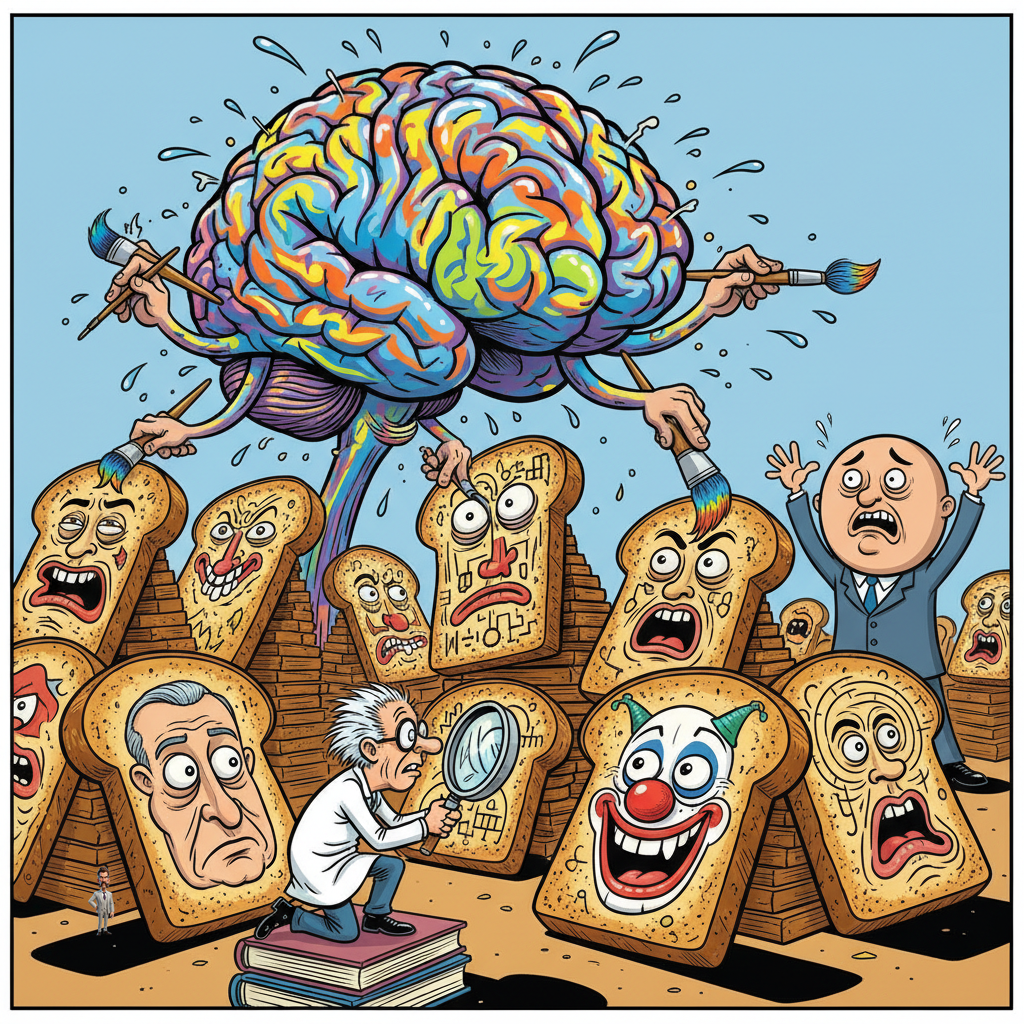
WASHINGTON D.C. — In a stunning blow to objective reality, a consortium of leading neurologists and cognitive psychologists announced today that the human brain is fundamentally unreliable, constantly conjuring images and connections from random stimuli. The findings, published in the journal *Cognitive Dissonance Quarterly*, suggest that phenomena like seeing faces in electrical outlets or religious figures in snack foods are not isolated quirks but rather core features of human perception.
“For years, we’ve dismissed pareidolia as a harmless oddity, a fun little glitch,” stated Dr. Evelyn Reed, lead researcher at the Institute for Perceptual Malfeasance. “But our data indicates it’s more like a constant, low-level hallucination engine. Your brain isn’t just seeing patterns; it’s *insisting* on them, often with the conviction of a conspiracy theorist explaining chemtrails.”
The study involved showing participants a series of ambiguous images, ranging from cloud formations to stained walls, and recording their instantaneous, often deeply personal, interpretations. A significant percentage reported seeing everything from their disapproving high school principal in a coffee stain to the entire plot of *Succession* in a pile of laundry.
“It’s not just about faces anymore,” added Dr. Reed. “It’s about narrative. Your brain is a novelist, and it’s always writing, even when the only input is a damp patch on the ceiling.” Experts now warn that this inherent pattern-seeking tendency may explain everything from political polarization to why people keep buying lottery tickets.