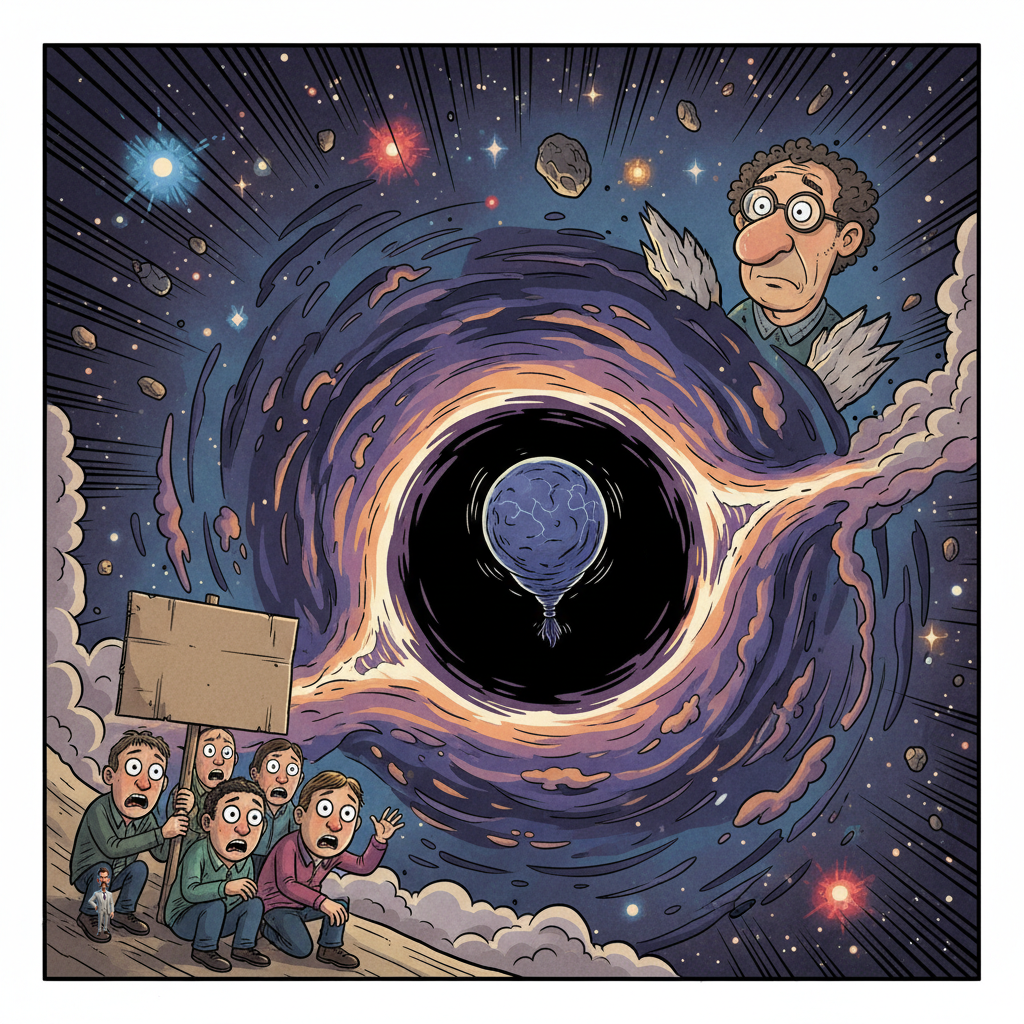
ITHACA, NY – In a groundbreaking discovery that has left absolutely no one surprised, new data from major dark-energy observatories indicates the universe is indeed heading for a dramatic, yet utterly predictable, 'big crunch.' A Cornell physicist has calculated that after reaching its maximum size in a mere 11 billion years, the cosmos will begin a slow, agonizing collapse, concluding its run approximately 20 billion years from now.
“Frankly, we’re just relieved it’s not an asteroid or a supervolcano,” stated Dr. Evelyn Reed, lead researcher on the project, during a press conference held primarily for the benefit of future cosmic dust. “For millennia, humanity has been preparing for an end that feels both inevitable and vaguely disappointing. This 'big crunch' theory perfectly encapsulates that feeling. It’s not a fiery cataclysm; it’s more like a cosmic sigh of resignation.”
The findings confirm what many have long suspected: the universe, much like a poorly managed startup, will eventually run out of steam and implode under its own weight. “It’s the ultimate ‘I told you so’ moment for every philosopher who ever stared blankly into the void,” added Dr. Reed. “Turns out, the void was just waiting for its cue.”
Experts are now advising humanity to continue ignoring existential threats for the foreseeable future, as the universe has clearly got this one covered, albeit very, very slowly.