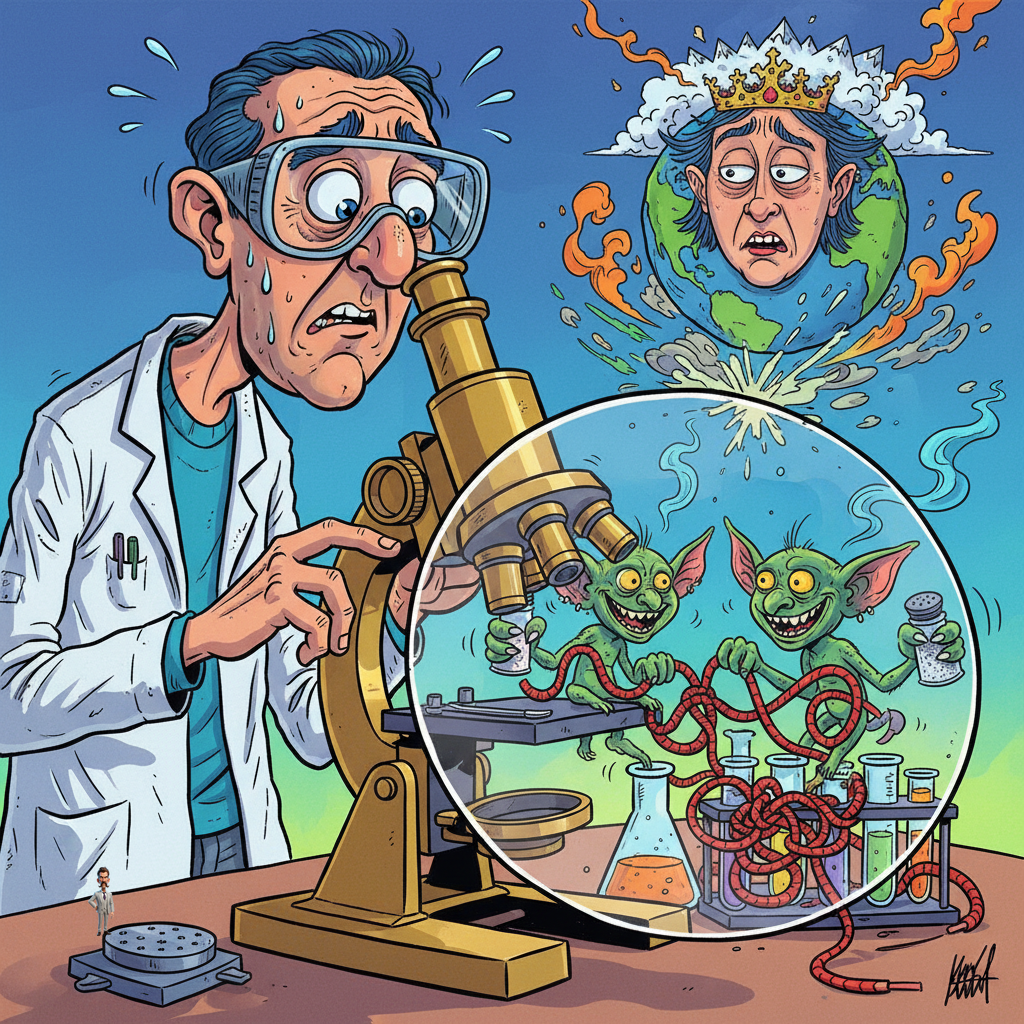
WASHINGTON D.C. — A groundbreaking study published today confirms humanity's long-held suspicion that everything is secretly more complex and irritating than it appears. Researchers found that for every known vertebrate species, there are approximately two additional 'cryptic' species that are visually indistinguishable but genetically unique, existing solely to confound amateur naturalists and professional taxonomists alike.
“We always suspected there was an unseen layer of biological pettiness at play,” stated Dr. Evelyn Reed, lead author and head of the Department of Existential Frustration at the National Institute of Zoological Pedantry. “It’s not enough for a frog to be a frog; it has to be *three* frogs that look exactly the same but can’t interbreed. It’s the universe’s way of saying, 'You thought you had this figured out? Think again, pal.'"
The discovery, made possible by advanced DNA sequencing, reveals millions of years of independent evolution resulting in creatures that look, sound, and act identically, yet are distinct enough to warrant their own Wikipedia pages. Critics suggest this phenomenon is less about biodiversity and more about nature’s passive-aggressive tendencies.
“Imagine trying to explain to your child that the 'same' bird they saw yesterday is actually a completely different, genetically isolated bird,” commented local parent Mark Jensen. “It’s exhausting. It’s like finding out your favorite band has three identical tribute acts, but only one is the 'real' one, and they all play the same songs.”
Experts warn that this revelation could lead to a global surge in existential dread, as people begin to question if their own identical-looking neighbors are, in fact, separate, cryptic humans.