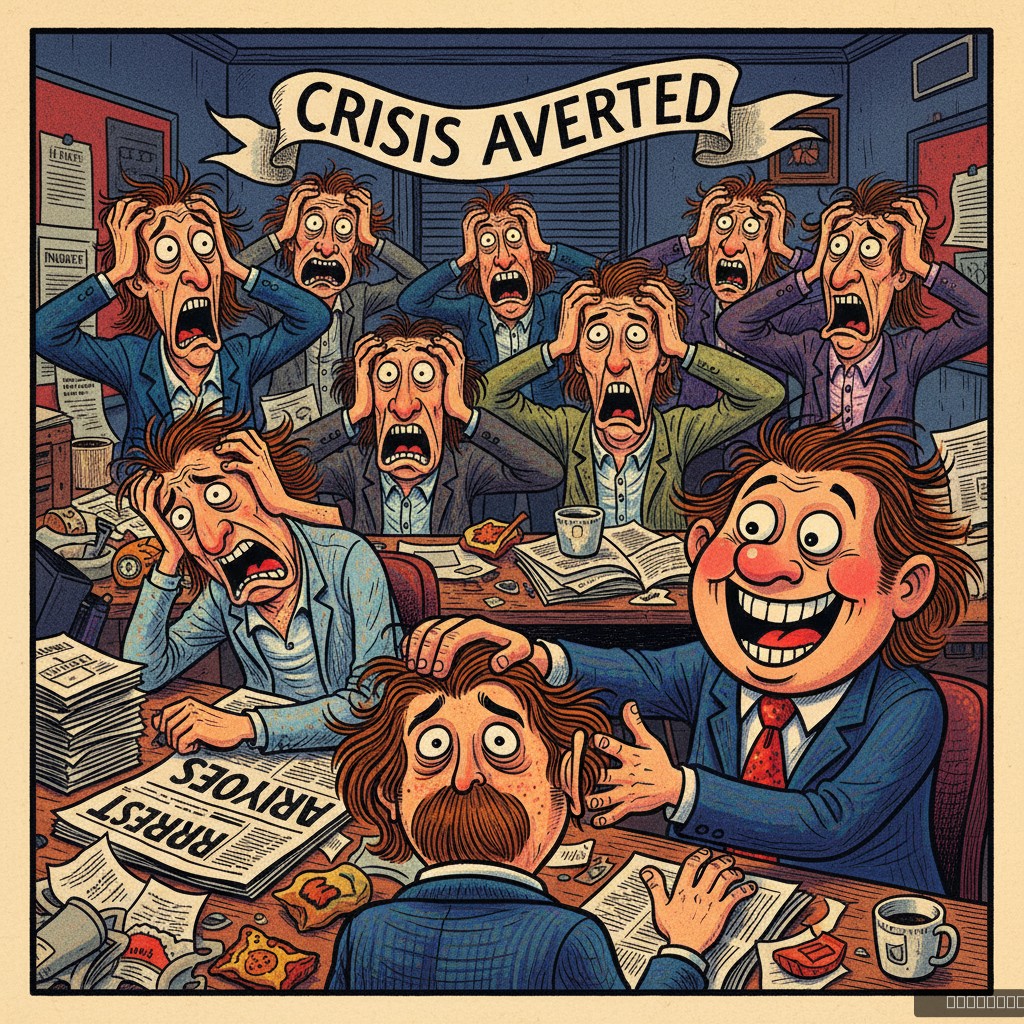
NEW YORK – The hallowed halls of The New York Times were reportedly gripped by a profound, almost spiritual crisis last week, following a brief, unscheduled internal debate over whether to report on the fleeting arrest of Andrew Mountbatten-Windsor. Sources within the paper describe a period of intense self-reflection, culminating in a 17-hour editorial meeting to dissect the ethical implications of 'nearly' breaking a story.
“It was a close call,” admitted Beatrice 'Bix'by Sterling-Pott, Head of Un-Reported Incidents and Thought Experiments at the Times, wiping a bead of existential sweat from her brow. “For a moment, a fleeting, terrifying moment, we actually considered treating a royal like a regular person. The sheer audacity of such a notion sent shockwaves through our meticulously calibrated journalistic ecosystem.”
The Times's 'Pre-Publication Scrutiny Unit' (PPSU), a department dedicated solely to analyzing potential news items that might be too 'uncomfortable' for certain demographics, was activated at 03:17 GMT. Its 47 analysts reportedly worked around the clock, producing a 300-page report titled 'The Perils of Proximity: When News Gets Too Close to the Crown.'
“Ultimately, we decided that the public is better served by our thoughtful deliberation on *how* we might have covered it, rather than the actual coverage itself,” explained Sterling-Pott. “It's about the process, you see. The intellectual journey. And frankly, the sheer effort of contemplating such a bold move is news in itself.” The paper is expected to publish a 10,000-word exposé on its internal decision-making process next Sunday.