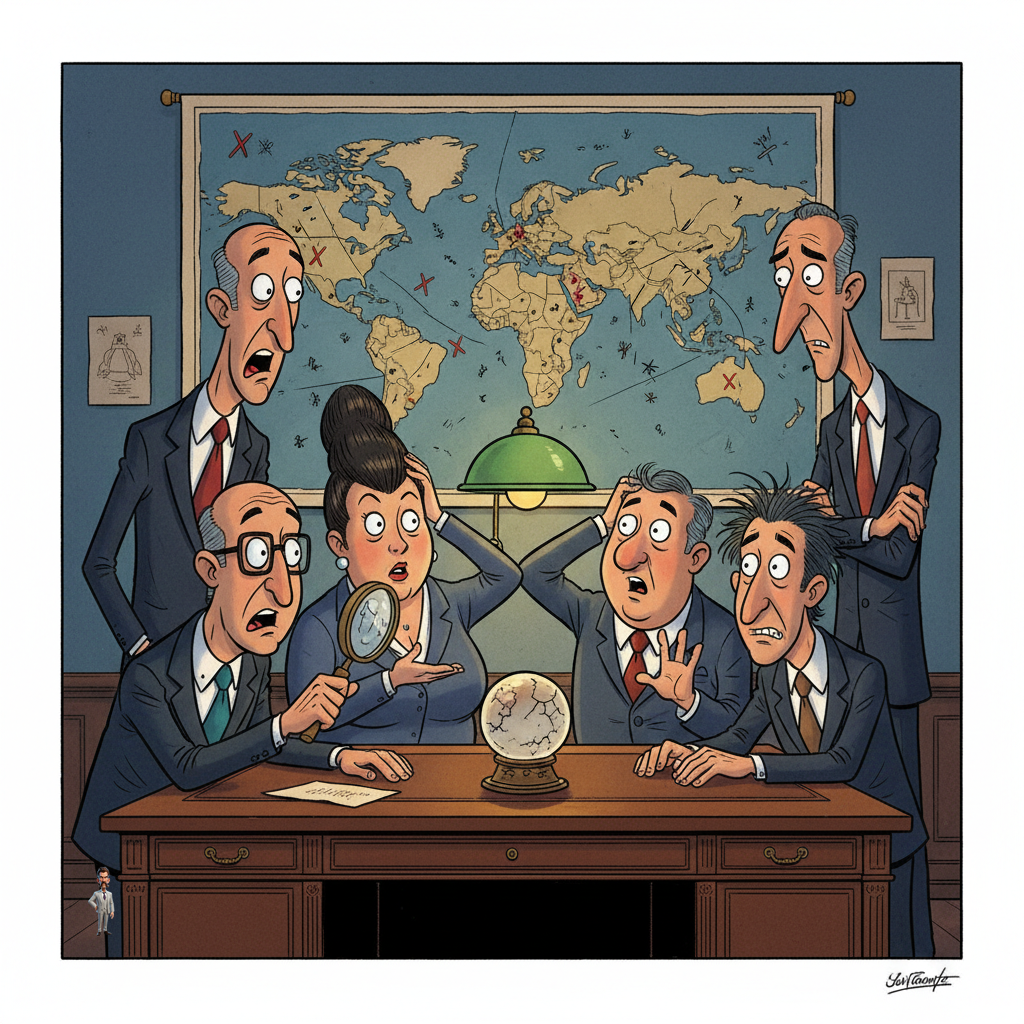
WASHINGTON D.C. — In a revelation that has stunned precisely no one paying attention, top U.S. foreign policy strategists have conceded that the nation's capacity to flawlessly predict, much less unilaterally orchestrate, the internal political machinations of sovereign states like Iran is, in fact, 'quite limited.' The admission comes after years of operating under the apparent assumption that the U.S. possessed an innate, almost mystical, foresight into the precise 'next steps' for nations it deemed problematic.
"We've always approached these situations with the confidence of someone who's just watched a particularly inspiring action movie," stated Dr. Evelyn Thorne, a senior fellow at the Institute for Geopolitical Certainty, a newly formed think tank dedicated to understanding why things rarely go according to plan. "It turns out, however, that real-world governance is less about montage sequences and more about, well, actual governing. And that's messy."
Sources close to the administration, speaking on condition of anonymity because they were tired of being wrong in public, confirmed that the White House has been grappling with the 'unexpected complexity' of international relations. "It's not like we didn't try to just decide what would happen next," one official confided. "We just found that Iran, much like a stubborn cat, simply refused to perform the tricks we'd envisioned for it."
Analysts suggest this newfound humility might lead to a groundbreaking shift in U.S. foreign policy, possibly involving the radical concept of 'observing and reacting' rather than 'pre-ordaining and being surprised.' The Pentagon has reportedly begun exploring options for a 'less omniscient' approach to global affairs, including purchasing a world atlas with all the countries labeled.