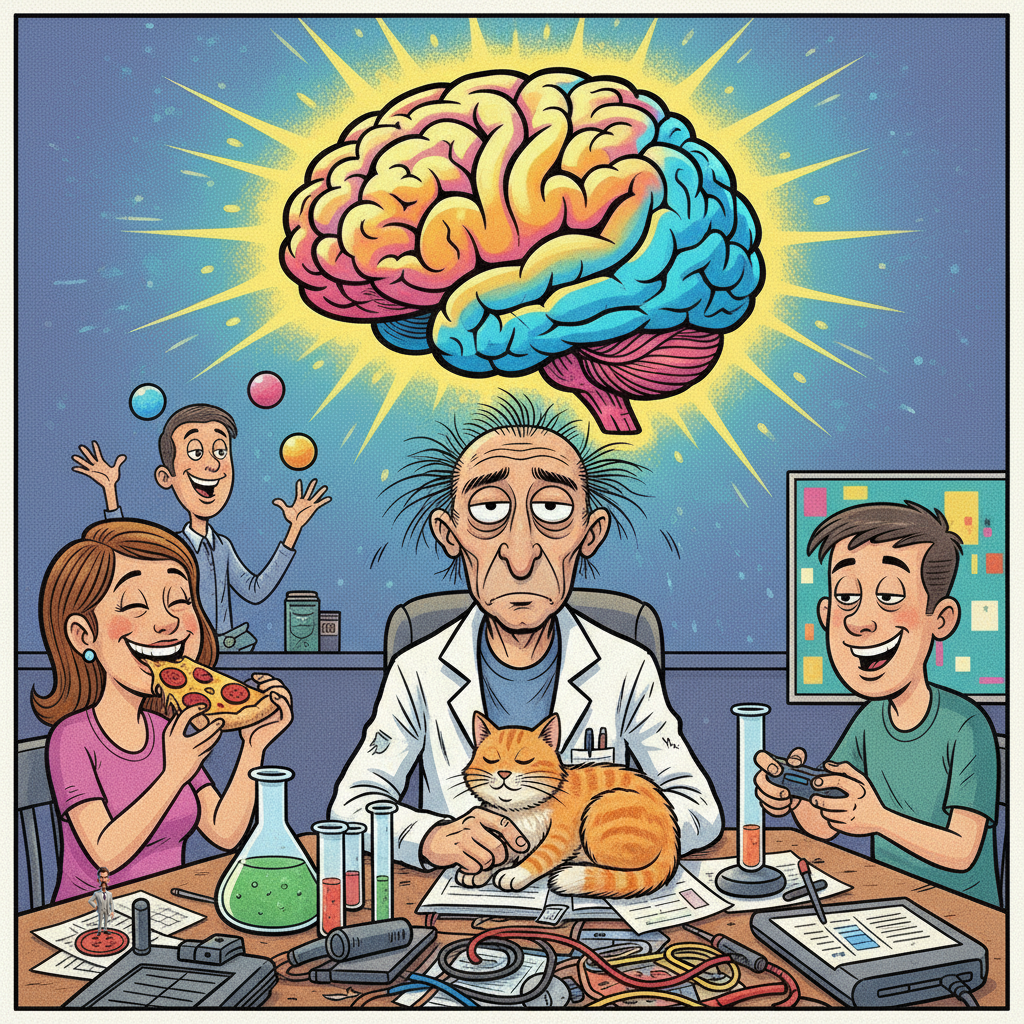
PALO ALTO, CA – A new study published by the Institute for Obvious Discoveries has unveiled a revolutionary finding: individuals who regularly partake in activities they genuinely enjoy tend to exhibit superior cognitive function and report higher levels of overall contentment. The report, which involved thousands of participants across various demographics, concluded that 'more enjoyment' is a consistent byproduct of, well, enjoying things.
Dr. Evelyn Thorne, lead researcher and head of the Department of Self-Evident Truths at Stanford, expressed cautious optimism regarding the implications. 'For years, we've suspected a link between doing stuff you like and feeling good,' Dr. Thorne stated in a press conference. 'Now, thanks to millions in grant funding and countless hours of data analysis, we can definitively say: yes, that's absolutely the case. It's truly groundbreaking work, if you consider the ground to be a well-trodden path everyone already walks.'
The study’s methodology involved observing subjects engaging in various leisure activities, from competitive bird-watching to artisanal cheese carving, and then measuring their brain activity and self-reported emotional states. The results consistently showed that participants who were, for example, 'having a blast' during their chosen hobby, also registered higher scores on subsequent memory and problem-solving tests. Conversely, those forced to endure activities they loathed, such as mandatory corporate team-building exercises, performed markedly worse.
Critics have questioned the necessity of such a study, with one anonymous pundit remarking, 'Did we really need a peer-reviewed paper to tell us that being happy makes you smarter?' However, Dr. Thorne insists the research provides crucial scientific validation. 'It’s not enough to just *know* something intuitively,' she explained. 'We need to quantify it, publish it, and then recommend it as a 'surprising new habit' for your morning routine.'