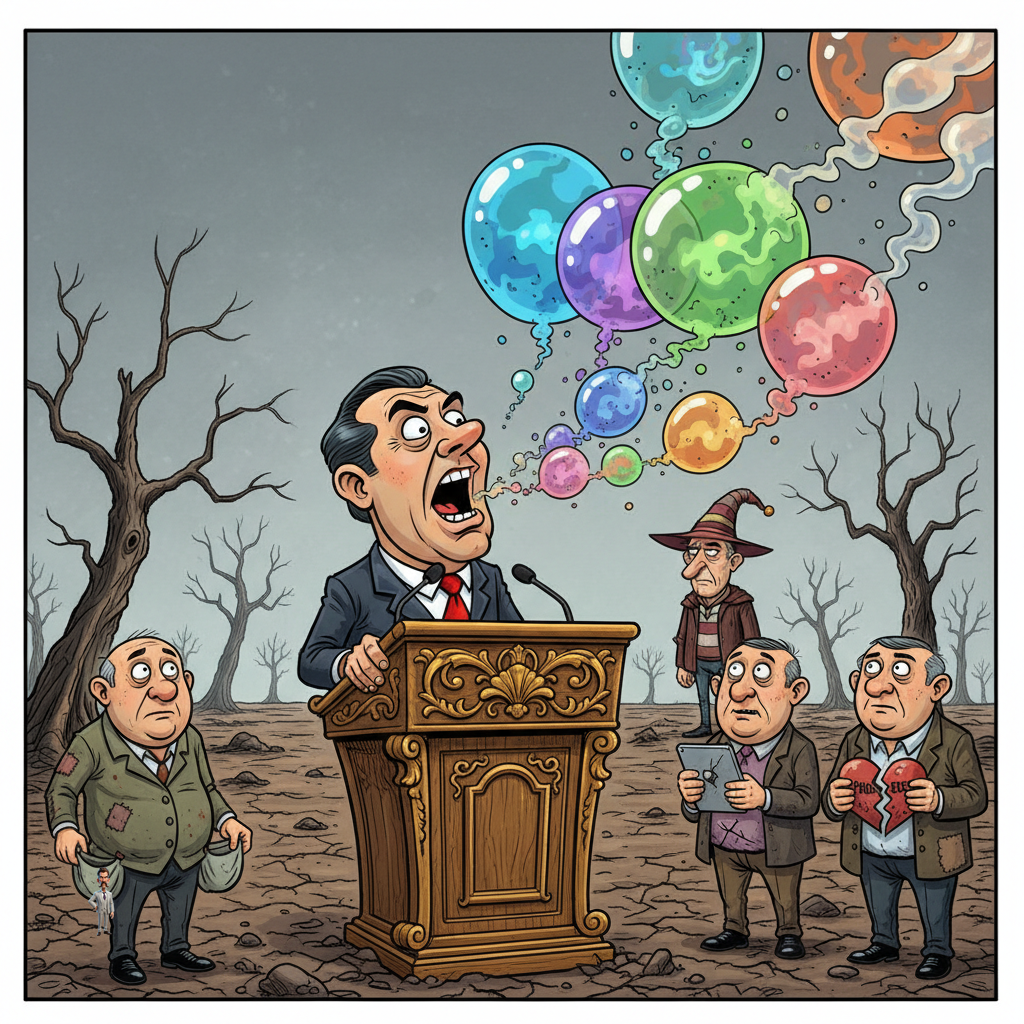
WASHINGTON D.C. – A recent, extensive analysis of political rhetoric versus actual governance has unveiled a startling conclusion: statements made by candidates during campaigns bear little to no correlation with their actions once in power. The findings have sent ripples of mild surprise through a populace that, deep down, suspected as much but had hoped for better.
“We meticulously tracked thousands of promises, pledges, and solemn vows made on debate stages and rally platforms,” explained Dr. Evelyn Reed, lead researcher at the Institute for Unfulfilled Expectations. “Our data indicates a near-perfect inverse relationship between the fervor with which a promise is made and the likelihood of its eventual fulfillment. It’s almost as if the words are designed to achieve a short-term electoral goal rather than serve as a binding contract.”
The study highlighted numerous instances where leaders, including former President Donald Trump, appeared to pivot dramatically from previously stated positions, particularly concerning foreign policy and economic interventions. “It’s a classic case of ‘do as I say, not as I’ll probably do later,’” quipped political analyst Marcus Thorne, who was not involved in the study but has observed this phenomenon for decades. “The public seems to have an infinite capacity for being surprised by the completely predictable.”
Experts suggest that this newly confirmed trend might lead to a radical shift in how voters approach elections, or, more likely, will be completely ignored by the next news cycle.