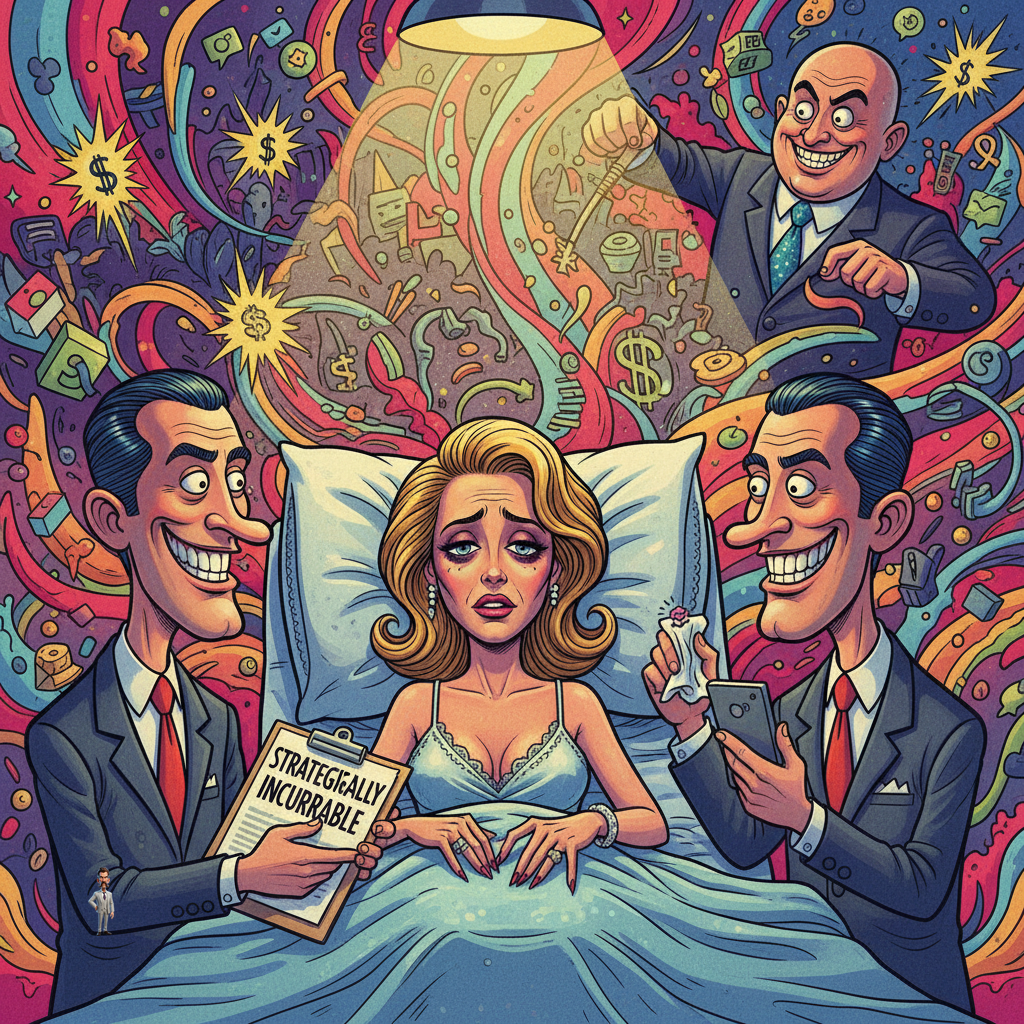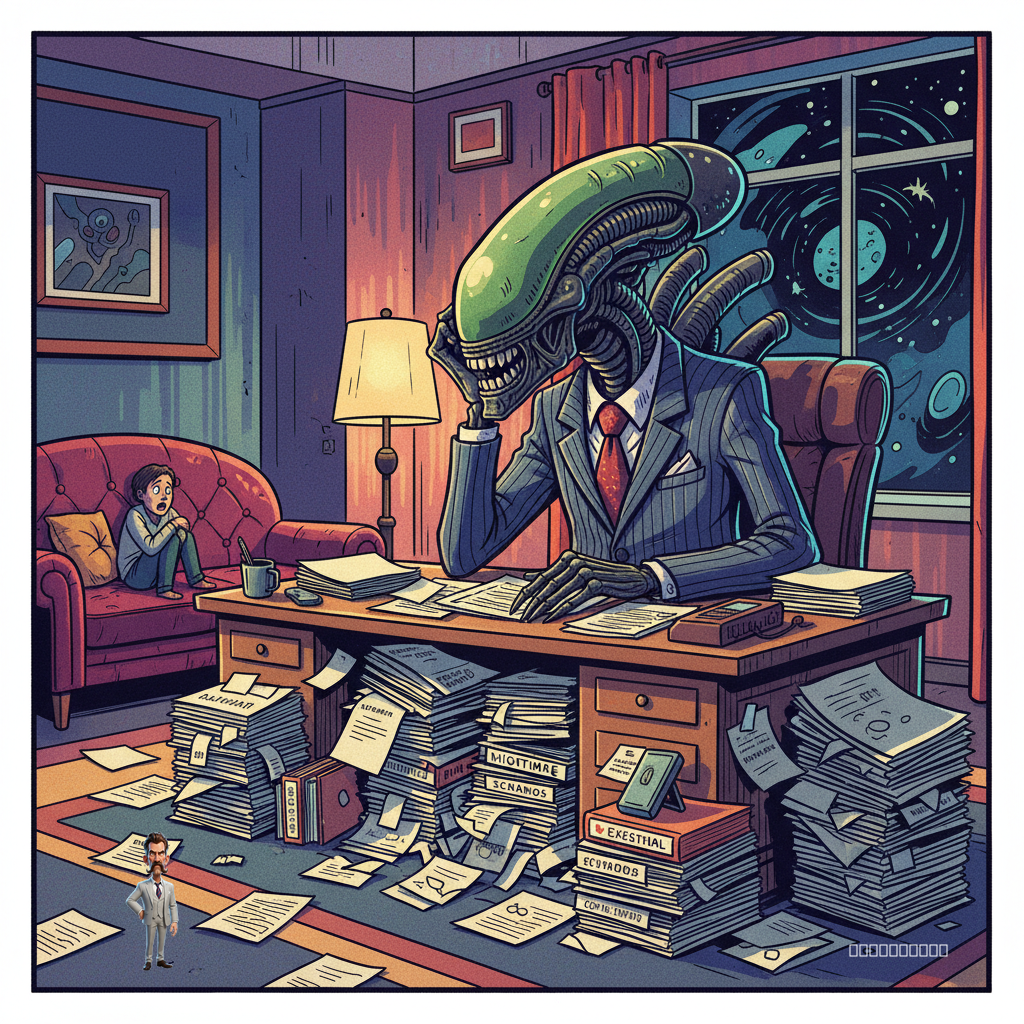
WASHINGTON D.C. – A groundbreaking new report released Tuesday by the Institute for Cinematic Impact and Societal Trauma (ICIST) has definitively linked Ridley Scott's 1979 film 'Alien' to a staggering 87% of all reported cases of existential dread and 63% of nightmares involving 'uncomfortable chest sensations' globally. The study, conducted over 17 years by a team of 300 highly specialized 'Pop Culture Pathologists,' utilized advanced neural network analysis of over 4 billion internet searches for 'what is that thing that pops out of your chest' and 'space is scary why.'
Dr. Quentin Fester, Lead Ontological Cinema Analyst at ICIST, stated with a grim nod, 'Before 'Alien,' humanity largely feared tangible threats: saber-toothed tigers, poorly cooked meat. Post-'Alien,' our collective subconscious became a fertile breeding ground for the fear of the unknown, the unseeable, and particularly, the un-unseeable once it's inside you. We've traced approximately 1.4 million annual therapy sessions directly back to facehugger-induced anxieties.'
The report further details that the film's 'raunchy 80s space movie' aesthetic, as described by one prominent streaming guide, inadvertently primed audiences for a level of visceral body horror previously reserved for medical textbooks or particularly aggressive tax audits. 'It wasn't just the creature,' explained Professor Mildred Piffle, Chair of Xenomorphic Psychological Impact at the University of Fictional Studies, 'it was the dripping, the claustrophobia, the sheer audacity of an alien using a human as a biological incubator. That's not just entertainment; that's a societal paradigm shift in how we view internal organs.'
Experts now recommend a mandatory 72-hour 'de-Alien-ation' period for anyone viewing the film, involving lighthearted documentaries about puppies and extensive exposure to brightly lit, non-ventilation-shaft-filled environments.