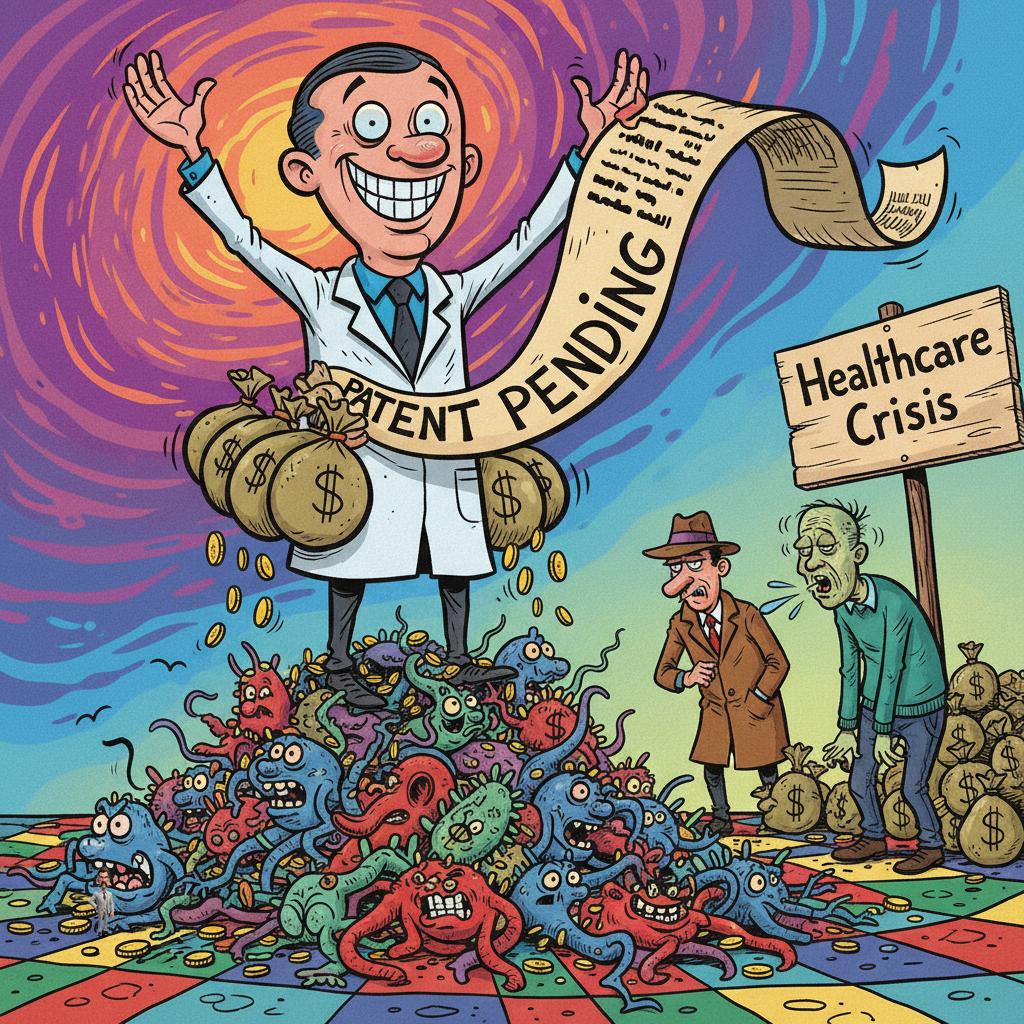
CAMBRIDGE, MA – In a monumental achievement for global health, scientists at the prestigious Whitehead Institute have reportedly discovered a bacterial 'kill switch' that could revolutionize the fight against drug-resistant superbugs. However, sources close to the project confirm that the immediate next step isn't widespread deployment, but rather a meticulously planned, multi-tiered intellectual property strategy designed to maximize shareholder value.
“We’re thrilled to announce this groundbreaking discovery, which effectively disables a key protein essential for bacterial cell wall construction,” stated Dr. Evelyn Reed, lead researcher, at a press conference held primarily for venture capitalists. “The potential to eradicate some of humanity’s most persistent threats is immense, and we believe our proprietary method of viral protein deployment, once fully patented and licensed, will be a game-changer for quarterly earnings.”
Industry analysts are already predicting a fierce bidding war among pharmaceutical giants for exclusive rights to the technology. “This isn’t just about saving lives; it’s about market dominance,” explained financial consultant Brock Sterling. “Imagine the recurring revenue from a patented kill switch. It’s a recurring revenue stream that literally kills.”
When asked about the urgency of deploying the discovery given the growing threat of antimicrobial resistance, Dr. Reed clarified, “We understand the public’s concern. Rest assured, once the legal framework is ironclad and the pricing model optimized, humanity will be our top priority.” The team is currently exploring options for a 'premium' superbug eradication package.